– By Mayank Agrawal, CEO & Managing Director, Paam Group
Quick answer: IS 4990 is the Indian Standard for plywood used in concrete shuttering (formwork). It covers boiling-water-proof (BWP) bonding, preservative-treated veneers and the plain, coated or film faced surface, and it sets tests for glue strength, stiffness and thickness. When sheets reach your site, look for the IS 4990 marking, then check the thickness, edges, film and weight before the boards go into use.
IS 4990 is the Bureau of Indian Standards (BIS) specification for plywood for concrete shuttering work. It is a separate standard from IS 303, which covers general purpose plywood for furniture and interiors.
Shuttering plywood has a harder life than furniture plywood. It has to carry wet concrete, take vibration, survive stripping and go through repeated wetting and drying. So IS 4990 sets tougher requirements for the glue line and for the strength and stiffness of the whole board. BIS revises the standard from time to time, so refer to the current edition when you write it into a purchase specification.
Every type of shuttering plywood uses BWP adhesive. The difference is the face, which decides the concrete finish and how well the board stands up to repeated pours.
| Face | What it is | Typical use |
|---|---|---|
| Plain | Shuttering plywood with no added surface layer | Foundations and concrete that will be hidden or plastered |
| Coated | A resin or polymer coating on the face | General RCC work with a moderate finish |
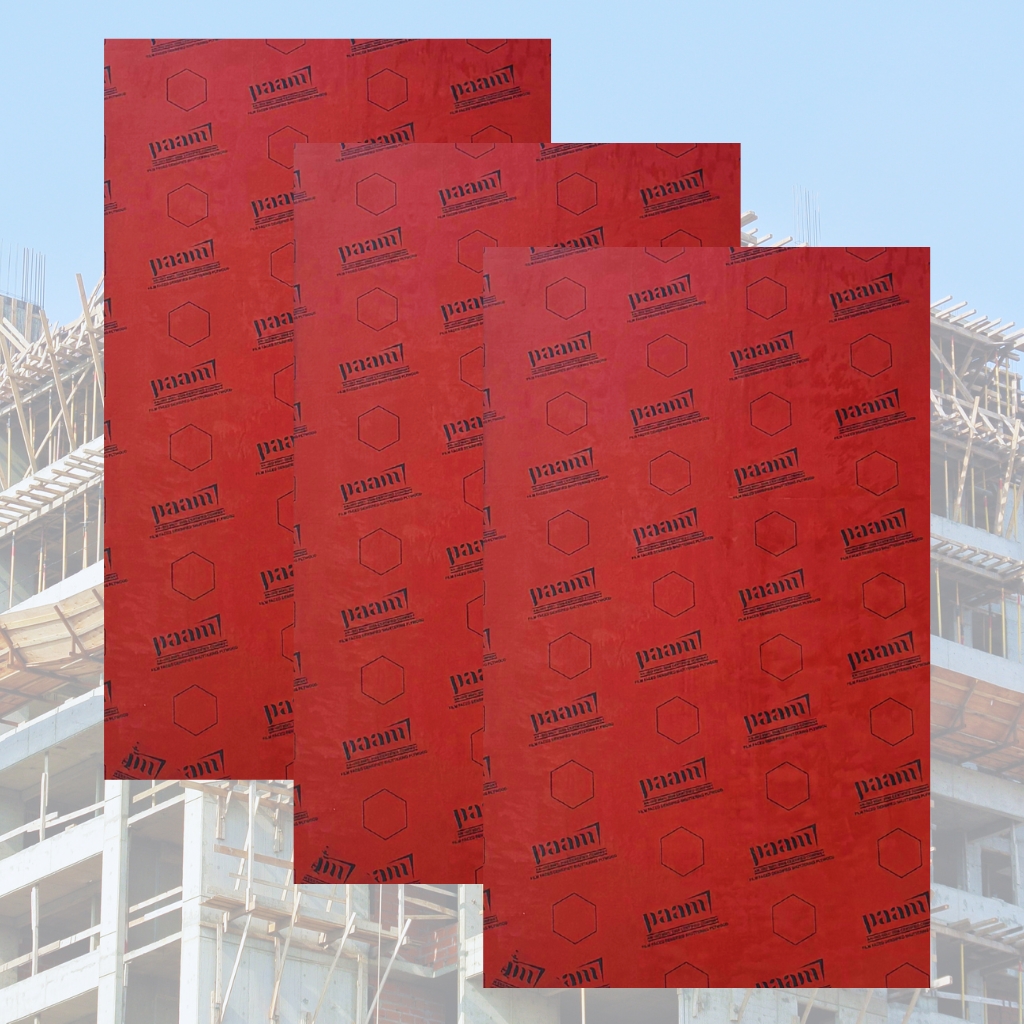
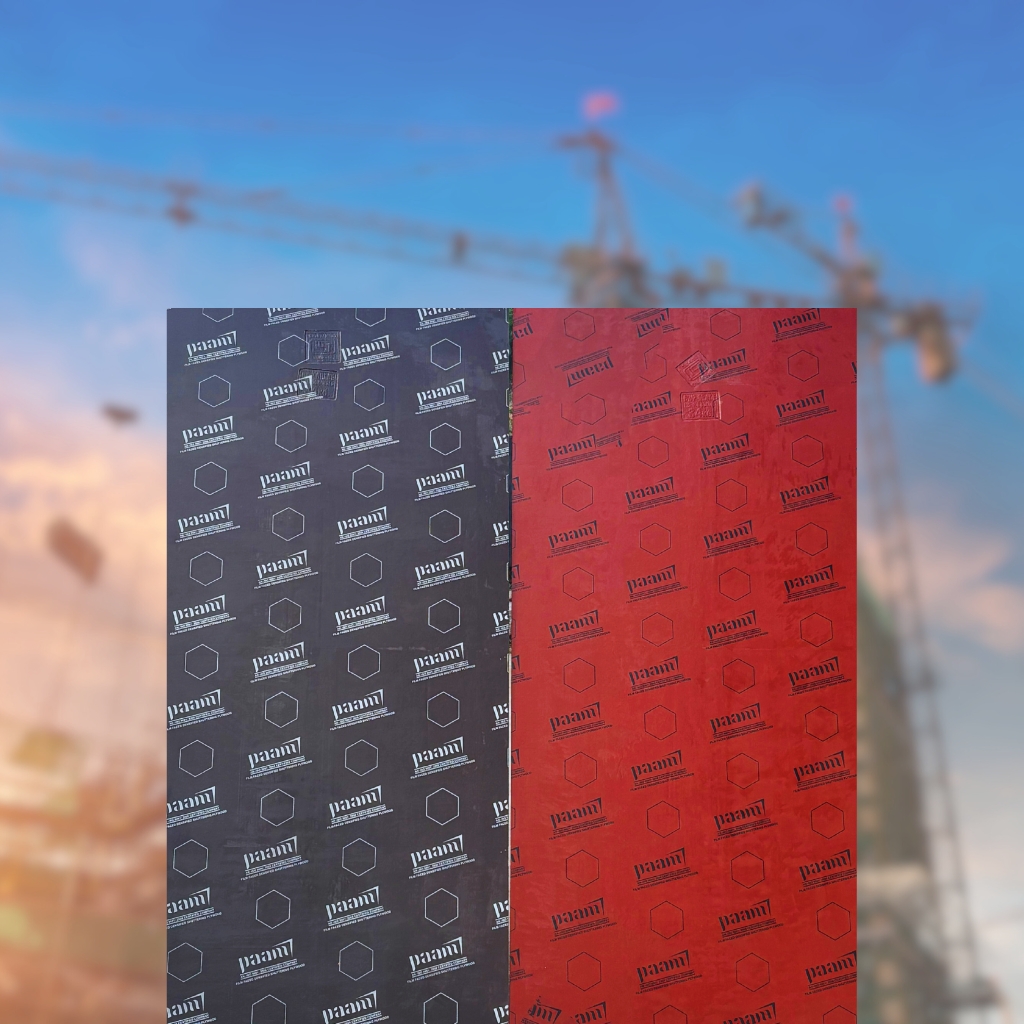
| Film faced | Phenolic film pressed onto both faces | Slabs, beams, columns and walls where a smooth finish matters |
Most RCC work on building sites in India uses film faced shuttering plywood, because the film gives a smooth finish, releases cleanly and protects the face across pours.
The standard sets laboratory tests that a manufacturer’s boards have to pass. The ones that matter most on site are:
You cannot run a boil test on site, but you can catch most problems at the gate:
For a large order, ask your supplier for test reports for the batch.
Normal plywood made for furniture and interiors (IS 303, often MR grade) uses glue that is not designed for long contact with water. On a slab it swells, the veneers separate and the concrete finish suffers, often within a pour or two. Shuttering plywood to IS 4990 uses BWP glue throughout, so it keeps its shape and bond through repeated wetting. That is why it costs more per sheet, and why it is usually cheaper per pour.
No. The standard sets material and test requirements, not a reuse count. How many pours you get depends on the grade and, above all, on site care: sealing cut edges, oiling before every pour, stripping and cleaning gently, and storing sheets flat and covered. Our guide to storing and using shuttering plywood on site covers each step.
Need help choosing the right shuttering plywood grade for your project? Talk to the Paam team or call +91-40-24615104.
About the author: Mayank Agrawal is CEO & Managing Director of Paam Group, which has supplied shuttering plywood and formwork materials to construction projects across India since 1982.
Your privacy matters to us. Our website uses a few essential cookies that help improve how our pages perform and provide you with a consistent experience. These cookies do not collect any personal or identifiable information - they simply ensure the site works as intended.