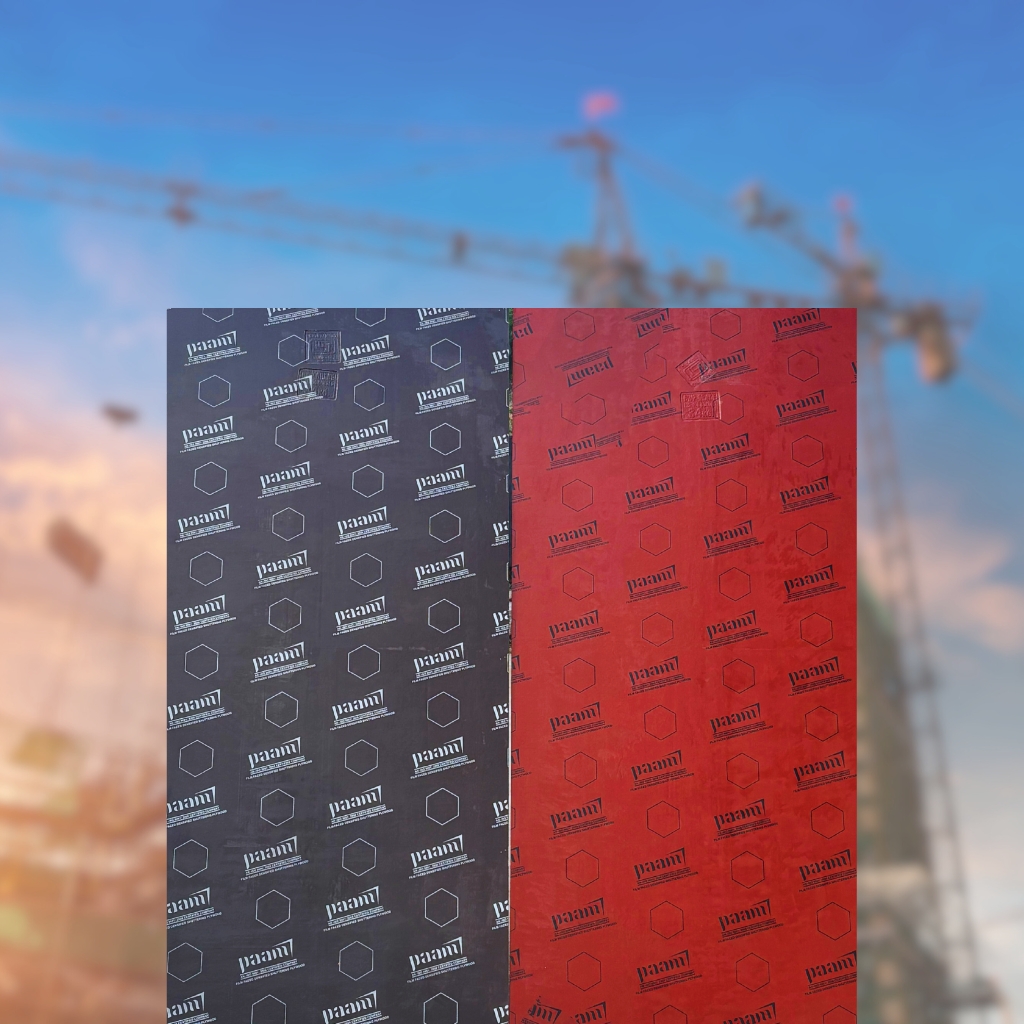
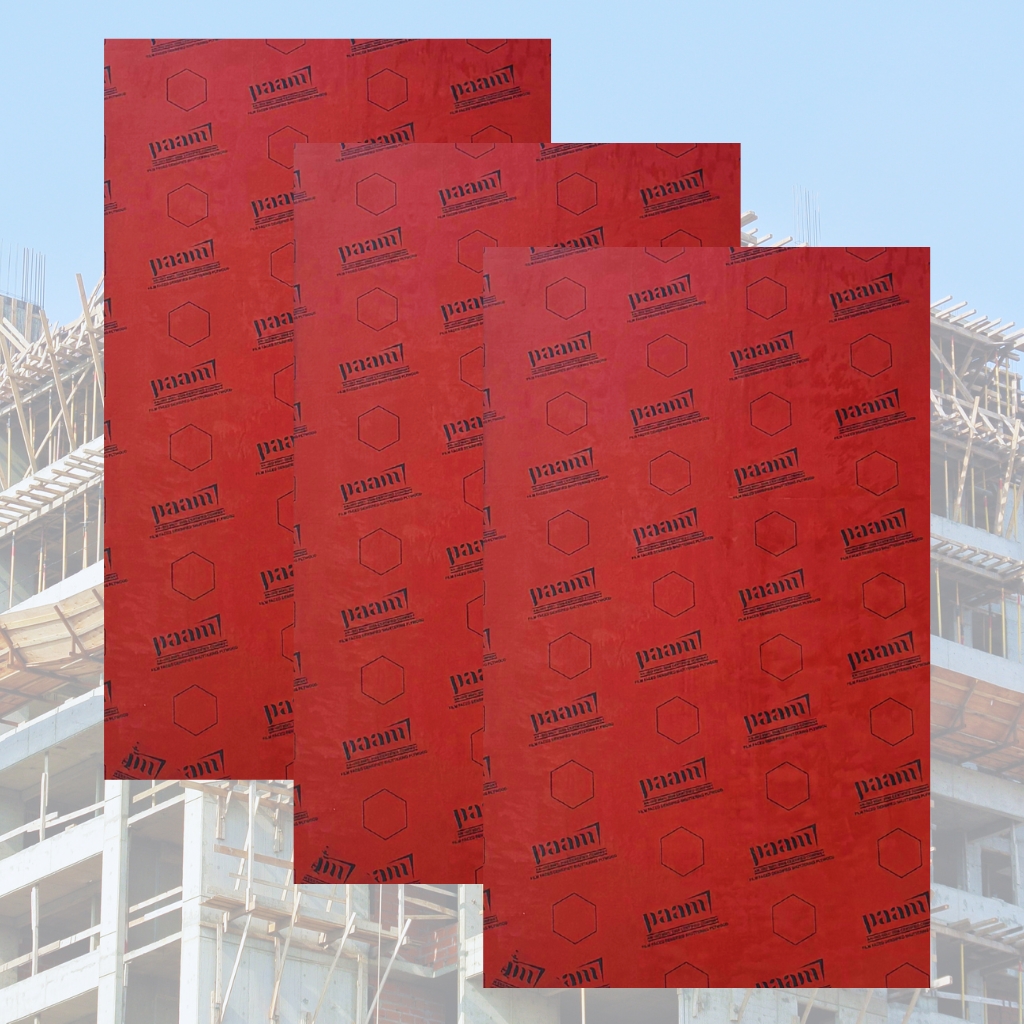
PAAM film faced shuttering plywood sheets

12 mm vs 18 mm Shuttering Plywood: Which Thickness to Use Where

– By Mayank Agrawal, CEO & Managing Director, Paam Group

Quick answer: Use 12 mm shuttering plywood where supports are close together: column boxes, beam sides, walls and slabs with closely spaced runners. Use 18 mm where supports are further apart, where the slab or pour is heavier, and where you need a flatter, exposed finish. Thickness is only half the decision: the spacing of the runners under the sheet matters just as much, and your formwork design should set both together.

Why thickness matters so much

Wet concrete pushes down on a slab soffit and sideways on wall and column forms. The plywood spans between the timber runners or steel members behind it, and it bends between them. Two simple rules of beam behaviour explain why the choice of thickness matters:

  • Stiffness rises with the cube of thickness. At the same span, an 18 mm board is about 3.4 times as stiff as a 12 mm board of the same quality (18³ ÷ 12³ ≈ 3.4).
  • Sag rises with the fourth power of span. Double the gap between runners and the board sags about 16 times as much.

So a 12 mm board on closely spaced runners can perform as well as an 18 mm board on wide ones. What you cannot do is take a layout designed for 18 mm, swap in 12 mm and keep the same spacing. That is a common cause of wavy slab soffits.

Where to use 12 mm and where to use 18 mm

ApplicationUsual choiceWhy
Column boxes and beam sides12 mmShort spans between yokes and battens; lighter to handle and cut
Walls with closely spaced studs or walers12 mmClose supports keep deflection low
Slab soffits with closely spaced runners12 mm or 18 mmEither works if the runner spacing is designed for the board
Slab soffits with wider runner spacing or thicker slabs18 mmStiffer board keeps the soffit flat under heavier loads
High walls and fast pours18 mmHigher concrete pressure on the form face
Exposed or architectural concrete18 mmLess deflection means a flatter, more even finish

These are common site practices, not design rules. Your formwork engineer or supervisor should fix the thickness and support spacing for each element from the concrete load and finish required. Browse our film faced shuttering plywood in both thicknesses.

Weight, handling and cost

An 18 mm sheet is heavier and costs more than a 12 mm sheet of the same grade. Paam Group’s film faced shuttering plywood comes in these weights for an 8 × 4 ft sheet:

ThicknessSheet weights available
12 mm24, 30, 34 and 38 kg
18 mm32, 42, 45, 52 and 57 kg

Within each thickness, a heavier sheet usually has a denser core that resists edge damage and lasts more pours. A wet board also weighs more, though, so check the IS 4990 marking, thickness and edges as well (see what to check in IS 4990 shuttering plywood).

When comparing 12 mm and 18 mm, look at cost per pour rather than price per sheet. A thicker board that holds its shape and finish for more pours, with fewer runners underneath, can work out cheaper over a project.

Getting the support spacing right

  • Run the face grain across the supports. Plywood is stiffer in the direction of its face grain, so sheets laid the wrong way round bend more.
  • Support every joint and stagger joints between rows of sheets.
  • Keep runners level. A runner that sits low or a prop that settles shows up as a wave in the soffit, whatever the board thickness.
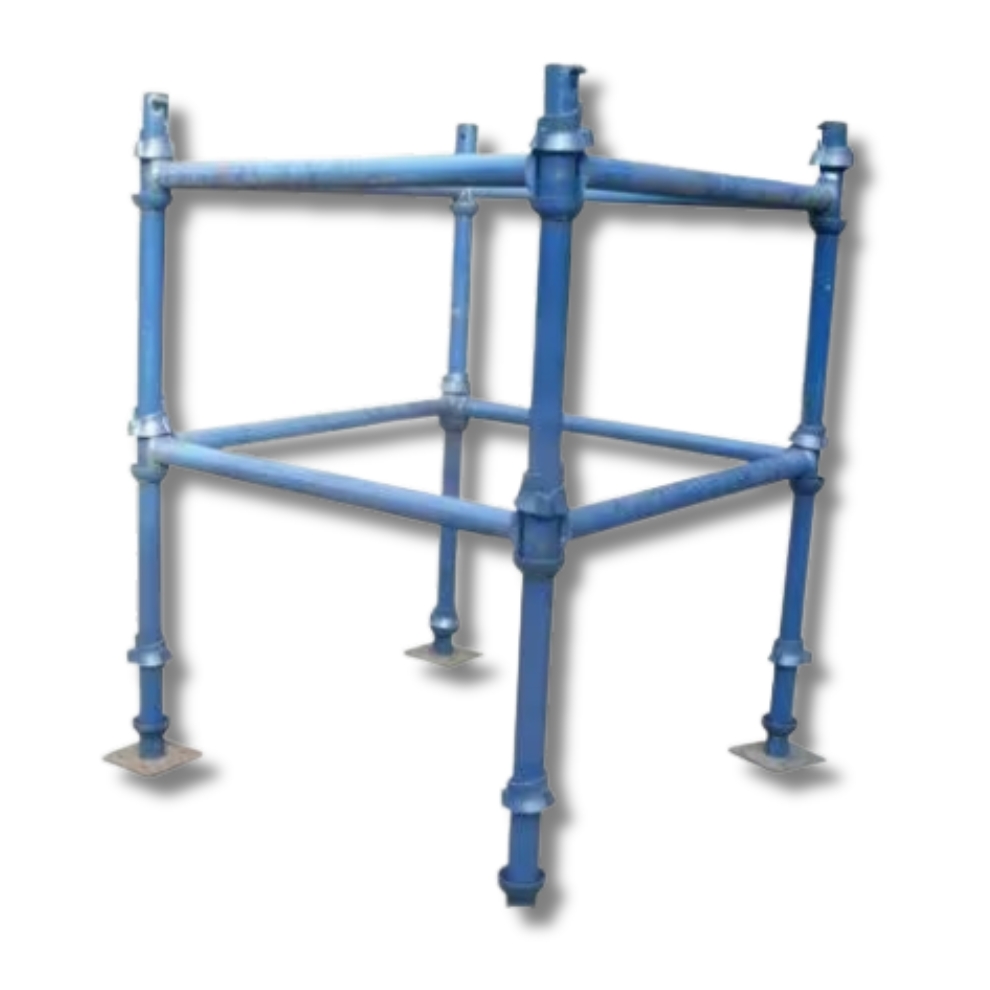
  • Brace and prop the falsework properly. Our guide to IS 14687 covers loads, bracing and striking times for the supports under the plywood.
  • Use sound timber runners and H-beams. See our timber products.

Signs you are using the wrong thickness

  • Waves in the slab soffit that repeat at the same spacing as the runners.
  • Bulges on wall or column faces between ties or battens.
  • Sheets that stay bent after stripping.
  • Grout leaking at joints because the edges have deflected.

Before blaming the board, check the runner spacing, levels and props. If those are right and the waves persist, use the thicker board or tighten the spacing. Waves can also come from swelling at unsealed edges or poor storage, which our storage and site-use guide covers.

Key takeaways

  • 12 mm suits columns, beam sides, walls and slabs with closely spaced supports.
  • 18 mm suits wider support spacing, thicker slabs, high pours and exposed finishes.
  • An 18 mm board is about 3.4 times as stiff as a 12 mm board at the same span.
  • Set thickness and support spacing together, and run the face grain across the supports.
  • Compare cost per pour, not price per sheet.

Frequently asked questions

Which is better for slab shuttering, 12 mm or 18 mm plywood?

Both are used. 12 mm works when the runners underneath are closely spaced. 18 mm is stiffer and suits wider runner spacing, thicker slabs and exposed finishes. Choose the thickness together with the support spacing.

How much stiffer is 18 mm plywood than 12 mm?

About 3.4 times as stiff at the same span, because stiffness rises with the cube of thickness (18³ ÷ 12³ ≈ 3.4), assuming the same quality of board.

Is 12 mm shuttering plywood strong enough for columns?

Yes, 12 mm is widely used for column boxes and beam sides, where the plywood spans only a short distance between yokes or battens.

How much does an 18 mm shuttering plywood sheet weigh?

Paam Group's 18 mm film faced sheets (8 × 4 ft) come in 32, 42, 45, 52 and 57 kg. Our 12 mm sheets come in 24, 30, 34 and 38 kg.

Why is my slab soffit wavy?

Waves that repeat at the runner spacing usually mean the board is too thin for that spacing or the runners are too far apart. Random bumps near edges usually mean moisture has got in through unsealed edges.

Need help choosing the right shuttering plywood grade for your project? Talk to the Paam team or call +91-40-24615104.

About the author: Mayank Agrawal is CEO & Managing Director of Paam Group, which has supplied shuttering plywood and formwork materials to construction projects across India since 1982.

SHARE THIS ARTICLE